How Kinetic Self-Powered Smart Door Locks Transform Check-In Management
Late arrivals and dead lock batteries are the most common emergency in short-term rental operations. Kinetic self-powered locks generate their own power from the handle movement itself, removing the weakest link in the arrival journey: the battery.
- #Kinetic Lock
- #Vacation Rental Check-in
- #Maintenance-free
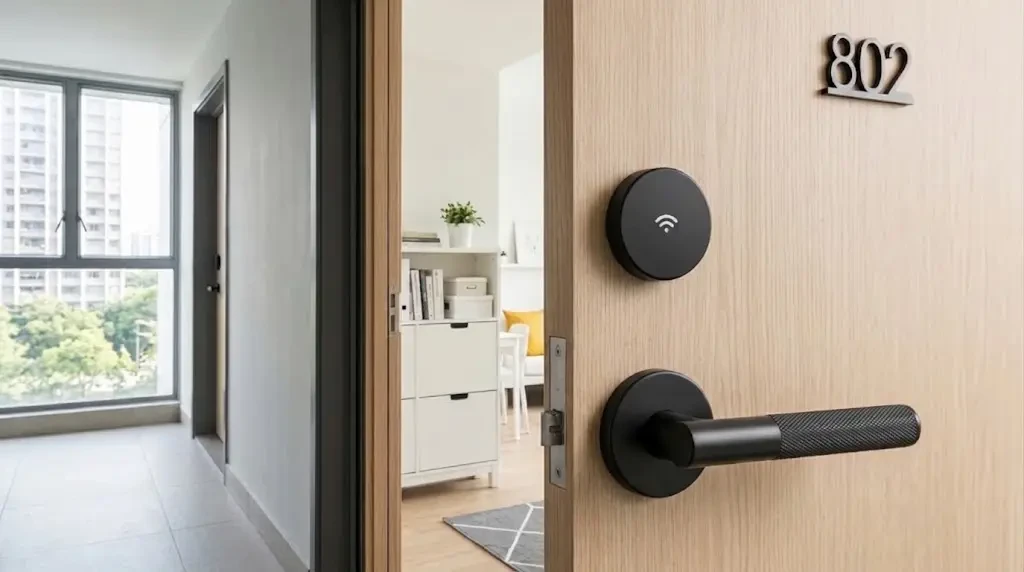
For short-term rental operators and Airbnb hosts, check-in is the single most pivotal touchpoint in the guest journey. It sets the tone for the stay and directly affects review scores, and it is also the most failure-prone part of remote property management.
Many hosts have met the same scenario: a guest lands after a delayed midnight flight, arrives at 2:00 AM in freezing rain, and discovers the electronic lock battery has died. The result is a frantic late-night call, an emergency locksmith and a poor review. Jiku Security kinetic battery-free smart door locks remove the fundamental point of failure in digital hospitality hardware: the disposable battery. Powered by mechanical kinetic energy harvesting and millisecond-level contactless authentication, they reduce maintenance for hosts and make arrivals effortless for travellers.

The hidden costs of battery-powered smart locks
First-generation digital keypad locks introduced automated keyless entry, and also saddled property managers with ongoing overheads:
- Unpredictable battery drain: smart locks continuously draw standby current to keep wireless radios active. In high-turnover rentals with frequent door cycles, batteries drain unpredictably within three to six months.
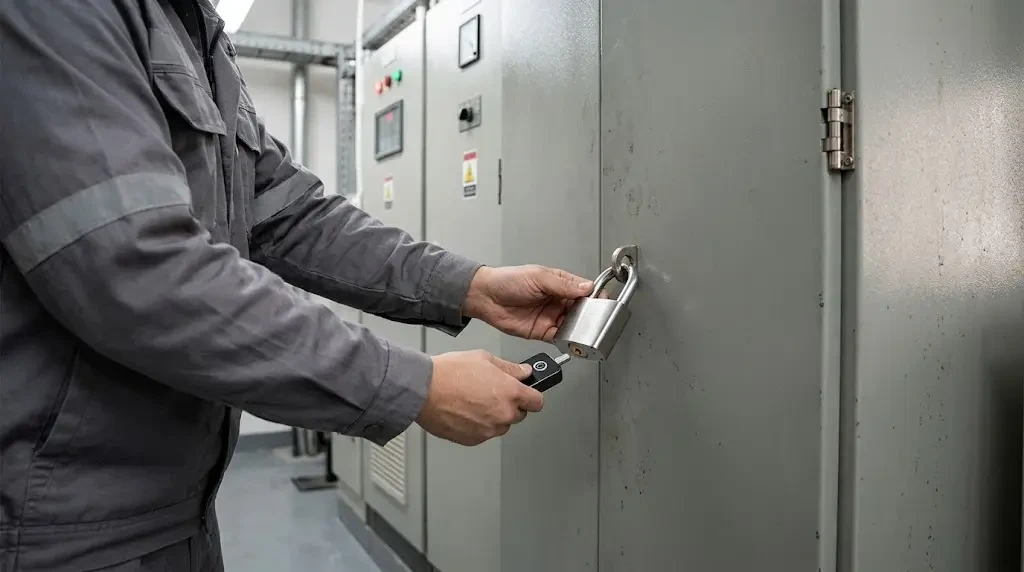
- Corrosive acid leaks: during low-season vacancies, cheap alkaline batteries left inside humid entry locks corrode and can permanently damage circuit boards and deadbolt motors.
- Wireless connectivity dropouts: direct Wi-Fi locks frequently drop off household routers. When a host generates a code while the lock is offline, the update fails to sync and the guest is left outside.
- Physical lockbox vulnerability: mechanical lockboxes with rolling dials are susceptible to weather jamming, code guessing and prying with simple hand tools.
The kinetic approach: how battery-free check-in works
A kinetic smart door lock generates its own operating energy directly from human movement.
Workflow: the guest arrives at the property, rotates the handle or presses the kinetic trigger to generate an instantaneous electrical micro-pulse, taps the phone for a millisecond cryptographic handshake, and the lock unlatches while the host receives a real-time check-in confirmation.
- Instant micro-generation: when the arriving guest depresses the handle or engages the activation trigger, internal micro-dynamos convert the mechanical movement into an instantaneous pulse of electrical energy.
- Millisecond authentication: the harvested power instantly awakens the lock's secure cryptoprocessor, which validates the guest's mobile digital key token in milliseconds using a lightweight security protocol.
- Effortless entry: no worn keypads to press, no screens affected by low temperatures and no risk of dead cells. The lock mechanism unlatches immediately.
Automation for property managers
The Jiku Security hospitality edition management platform fits into vacation rental workflows:
- Channel manager and PMS sync: connects with major booking platforms and property management systems, creating digital keys automatically on booking confirmation.
- Time-delimited access windows: guest credentials activate at check-in time and revoke instantly at check-out, reducing unauthorised late stays.
- Turnover tracking: cleaners and maintenance contractors receive personalised access profiles, so hosts can confirm when turnover cleaning finished before the next guest arrives.
Comparative advantage for rental portfolios
- Battery replacements: standard battery locks need two to four per year; kinetic locks need none.
- Guest lockout risk: higher with standard battery locks due to dead cells and winter voltage drops; kinetic locks do not depend on batteries.
- Operating temperature: standard battery locks degrade sharply below 0C; kinetic locks operate from -20C to +80C.
- Environmental impact: standard battery locks require continuous battery disposal; kinetic locks reduce battery consumption.
- Host maintenance stress: standard battery locks raise constant low-battery alerts; kinetic locks centre on access management.
By upgrading to kinetic self-powered locks, vacation rental operators reduce maintenance overheads and give every guest a smooth arrival.